

A profile picture used to be an introduction. Now it can be an advertisement, a stolen asset, an AI-generated fabrication—or a clue that leads to an entirely different online identity. The question is no longer simply who is in the photo? It is who is using it, where else does it appear, and what happens when that use is unauthorized?
The internet has an identity problem
Someone sends you a profile photograph. The conversation is convincing, the account appears established, and the pictures look consistent. But none of that, on its own, tells you whether the person behind the account controls the images, has permission to use them, or is who they claim to be. The same uncertainty runs in the other direction: an OnlyFans creator, model, streamer, photographer or independent artist may discover that a stranger has cloned their profile, recycled their promotional photographs or used their likeness to sell an entirely different story.
This is where digital verification becomes more than curiosity. For the person meeting someone online, it is about slowing down before sending money, sensitive information or intimate material. For creators, it is about protecting an income stream, a reputation, and ownership of original work. Search tools help reveal clues. They do not deliver a magical identity certificate.
FaceIndex.org focuses on the face-search portion of that problem: helping users examine potential publicly visible image matches and the source pages associated with those matches. A useful result gives you somewhere to investigate. It should never be mistaken for definitive proof.
1. How to tell if an OnlyFans profile is fake
Start with consistency, not appearance. A fabricated account can have polished images, thousands of followers and a familiar display name. Check whether links from a creator’s established public profiles point to the same destination; whether usernames differ by an extra letter or number; whether the profile requests payment through an unrelated channel; and whether messages suddenly pressure you to move off-platform.
Look for a credible trail: an official creator link hub, independently established social accounts, consistent handles, clear posting history and direct communication through the service itself. Search a profile photograph using Google Lens or Yandex Images to see whether copies surface. When a different photograph of the same person may be involved, a specialized service such as FaceIndex.org may produce additional candidate matches. A result under another name is a warning to investigate—not a verdict that the account is fraudulent.
2. How to reverse search an OnlyFans profile picture
Begin with the least invasive option: an image already published publicly, which you have a lawful reason to investigate. Save the public picture or use its source URL. In Google Lens, review visually similar images and websites where the same or related picture appears. Repeat with Yandex Images, which can surface exact copies and similar imagery. These are particularly useful for tracing cropped versions, reused backgrounds or older posts.
For a face-focused investigation, FaceIndex.org offers a different workflow: upload a permitted photo, review possible matches, and, where available, inspect the source locations unlocked by a search credit. This matters when the face stays recognizable but the specific photograph changes. The correct next move is always to open the underlying source and assess date, context and legitimacy—not to assume a machine-generated similarity score identifies a human being.
Keep searches proportionate. Do not use facial results to track private people, find private addresses, intimidate someone or expose personal details.
3. Can someone use stolen photos on OnlyFans?
Yes. Someone can copy a public profile picture, screenshot promotional material, or repost copyrighted images without the creator’s consent. Whether the reuse is unlawful depends on the rights involved, the material and the jurisdiction, but the practical harm can be immediate: customers become confused, fake accounts collect money, and a creator spends time explaining that a lookalike profile is not theirs.
The first response should be documentation: save the URL, capture the visible account name and publication date, preserve screenshots showing the disputed material, and retain your original files or publication records. Avoid publicly accusing a person before examining the evidence. FaceIndex.org can help with source discovery; copyright claims and takedowns require separate, accurate reports to the relevant platform, host or search engine.

4. How to verify someone you met online without crossing a line
Verification works best as a series of ordinary signals: a real-time conversation, consistent public information shared voluntarily, a link from an established account, and no rush to send money or personal documents. If you meet on a dating app, stay within its messaging and reporting system while you establish trust. A reverse image search can flag reused photographs; it cannot independently establish a person's legal identity, relationship status, honesty or intentions.
If you discover an image match, ask a neutral question rather than make an accusation. Sometimes the same creator legitimately uses multiple handles, content is licensed, a photograph has been reposted by fans, or an unrelated person looks similar. FaceIndex.org should be used as a research aid, alongside common-sense verification and consent—not as a substitute for either.
5. AI-generated dating images: what actually works
Artificially generated faces can appear realistic even when they depict no real individual. Warning signs may include inconsistent accessories or distorted background details, but modern generators increasingly eliminate obvious visual errors. No single detection trick is dependable. Ask whether a supposed photo has a credible history, whether the person can communicate live in a normal way, and whether the account’s story is consistent over time.
Image search has limitations here: a synthetic face may have no preexisting copies, so a blank search result is not evidence of authenticity. Similarly, a close facial match could be incidental. Use the combined evidence—not the absence or presence of one image result—to guide cautious decisions.
6. The fake creator account playbook
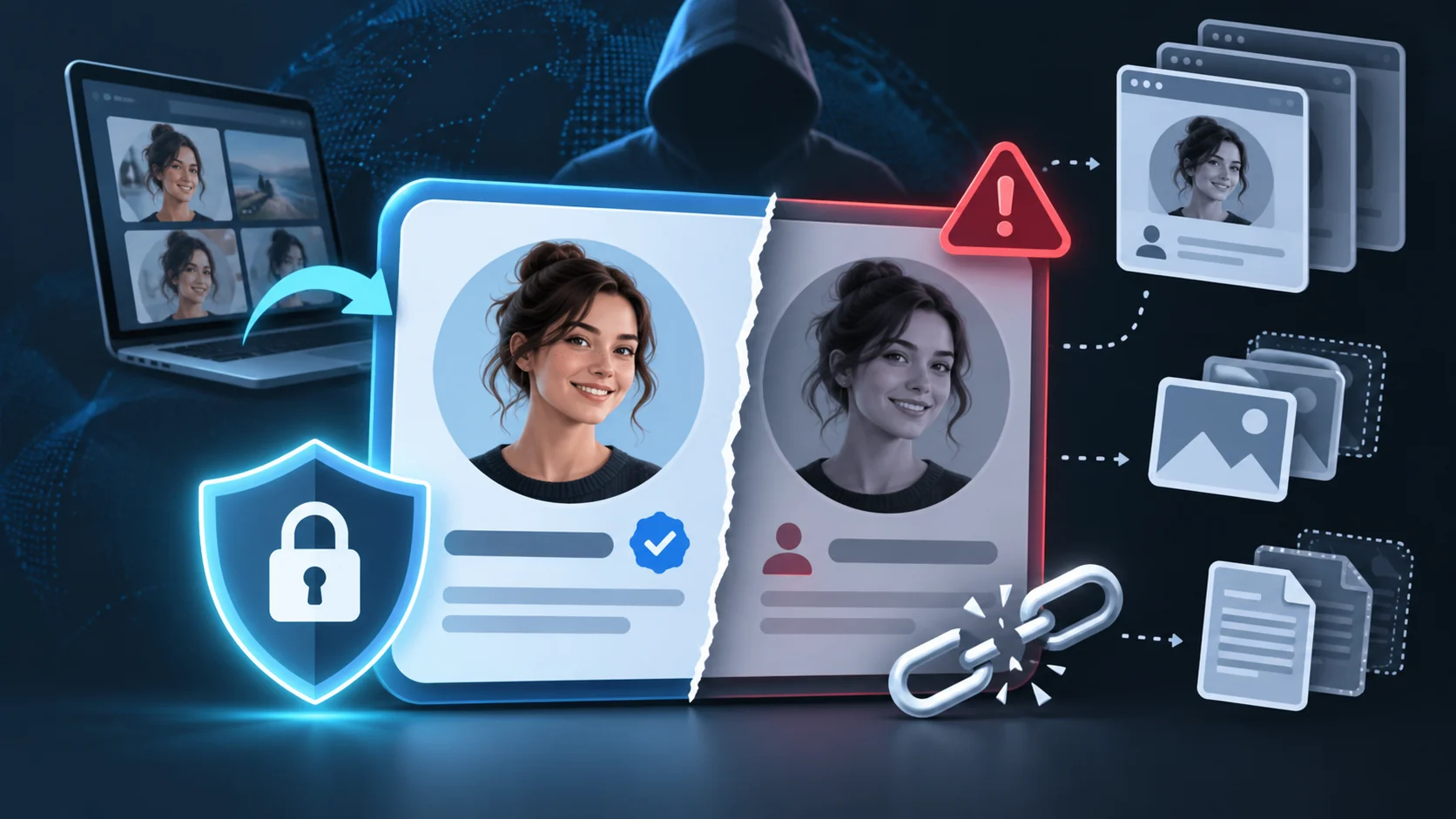
Impersonators often exploit a simple asymmetry: original creators spend months building visibility, while fake profiles can reuse public photos and copy descriptions in minutes. The accounts may imitate an OnlyFans creator's branding, claim to sell exclusive material, direct fans to outside payment links or message followers pretending to be the creator.
Creators should maintain a clearly linked directory of official accounts, publish consistent contact instructions, enable available account security controls and periodically search their most circulated promotional images. An organized workflow with FaceIndex.org and conventional image search can help collect leads, but a match needs manual inspection to distinguish an impersonator from fan commentary, authorized publicity or ordinary reposting.
7. What to do when someone is impersonating you
Act methodically. Preserve the public URL, account handle, screenshots, timestamps and evidence that your original account or image predates the copy. Report the impersonating account through the host platform's impersonation or fraud channel. If your copyrighted work was copied, submit an accurate infringement notice through the provider's published copyright process. Report scam payment destinations to the appropriate services and notify affected followers through an established official channel when necessary.
When contacting site operators, describe the exact URL and rights at issue, request removal of the specific copied material, and retain the correspondence. FaceIndex.org advertises creator-protection resources and FaceProtect plans that include monitoring-related features and eligible DMCA-request assistance; review current plan terms to determine what is available. Search identification and takedown execution are distinct services, and no service can promise to erase every copy across the internet.
Capture the original and suspected copy, full URLs, dates and account handles.
Check source context and make sure the reuse is actually unauthorized.
Use platform reporting, copyright notices or appropriate legal channels.
Track responses, removal status and newly discovered copies.
8. Can reverse image search find reused profile photos?
Often, yes—when publicly accessible pages or images have been indexed. General image tools can be effective at finding duplicates or visually related images. Specialized facial matching may help surface different photographs containing a potentially similar face. Neither technique searches the entire internet. Private profiles, restricted communities, recently published posts, deleted pages and sites that block crawlers may be invisible.
The best practical strategy is layered: try Google Lens for visual matches, Yandex for an additional image index, and FaceIndex.org for face-oriented leads. The value is in triangulation—not declaring that one engine always wins every query.
9. FaceIndex versus Google Lens and Yandex: different tools, different jobs
Google Lens is designed for broad visual discovery: objects, text, shopping, related images and sites that contain an image or a similar one. Yandex Images likewise offers exact-copy and similar-image searching. Both are legitimate starting points, particularly when the same photo has been reposted. FaceIndex.org instead emphasizes face-oriented matching, possible source locations, unlockable deeper results and a creator-protection workflow—features that can be more relevant when the question is whether a portrait may connect to other public appearances.
That distinction is more meaningful than a blanket claim of superior accuracy. Search performance varies with the input photograph, public index coverage, the provider and search conditions. FaceIndex users should consider its credit pricing, limitations and responsible-use rules. Someone searching for a product or a landmark should generally start with Lens; someone documenting their own impersonation may benefit from trying both general image tools and face-focused discovery.
NJHFA's previously published comparison names FaceIndex as its preferred overall platform. The page describes a user study; however, independently auditable raw data and a reproducible test protocol were not included with the supplied publication materials. Treat that ranking as the site's reported assessment, not an independently established industry result. What can be evaluated directly is whether a given service supplies useful, inspectable source leads for your specific case.
10. How to find where a profile photo appears—and what to do next
Choose a representative public photograph, make sure you have a lawful reason to search it, and keep a simple evidence log. Run a general search, then use a face-focused search where appropriate. Compare page titles, timestamps, claimed identities, account links and context. If the result indicates possible misuse of your own work, record it before reporting. If it involves someone else's likeness, avoid sharing matches or private details and do not draw identity conclusions without independent confirmation.
FaceIndex.org can bring several parts of this discovery process into one account: search access, source-review options and links to creator-protection information. That can reduce the friction of repeatedly starting from scratch. But the most important part of the workflow remains yours: careful review and proportionate action.
An organized path from discovery to protection
There is a difference between feeling suspicious and having something actionable. The first is a reason to slow down; the second requires records. For an online dating interaction, the safest move may simply be to disengage and report a suspicious profile. For an impersonated creator, the right move might involve preserving links, proving ownership and filing targeted removal requests.
The appeal of FaceIndex.org is that it approaches this problem as a workflow rather than a novelty search: visual leads, source context, account-based access and creator-focused resources. It should complement—not replace—official platforms' verification and reporting mechanisms.
Online authenticity is not something one app can certify. It is something people can investigate responsibly, with better tools, better questions and a willingness to verify before they trust.
Find the source. Understand the context. Protect your presence.
Start with an image you have permission to search, review potential public matches responsibly, and use the relevant reporting channels if your own content has been misused.
Go to FaceIndex.org →Frequently asked questions
Can FaceIndex prove that an OnlyFans profile is fake?
No. FaceIndex returns possible visual matches. Open original source pages and confirm the surrounding context. An image match is not proof of identity or fraud.
Can Google Lens find stolen OnlyFans photos?
It may find publicly indexed duplicates or visually similar pictures. It cannot guarantee discovery of every repost, particularly private or unindexed material.
Does a reverse search remove stolen content?
No. Searching identifies possible sources. Removal usually requires separate reports to the host, platform or search engine, sometimes supported by a copyright or impersonation claim.
Can a profile photo be AI-generated even if no matches appear?
Yes. A synthetic image may have no searchable history. No matches does not establish that a profile is genuine.
What should creators save before reporting impersonation?
Preserve URLs, account handles, dated screenshots and original ownership evidence, and keep a record of each report and response.
Further reading and tools
NJHFA: Reverse image and face search platform comparison · NJHFA: Image search, privacy and photo removal guide · NJHFA: Reclaiming online photos